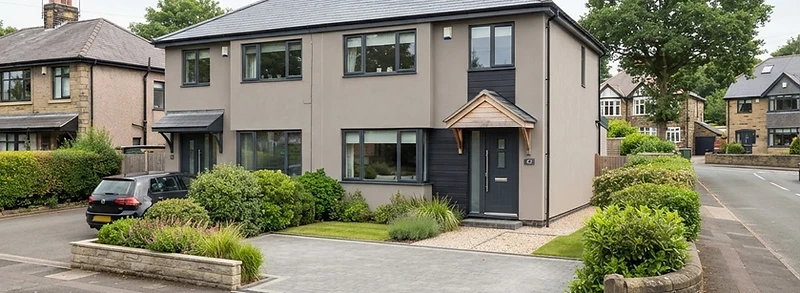
Rendering is priced per square metre, and the final cost depends on a handful of factors that vary from job to job. That's why we always quote from a look at the property rather than a price list — a number plucked from the air helps nobody.
The biggest factor is the system you choose. A basic sand and cement render is the most affordable option. Silicone render costs more but offers better flexibility, breathability and lower maintenance, which often makes it better value over the life of the finish. Monocouche and K Rend systems sit somewhere in between, with the benefit of through-colour so there's no repainting down the line.
The condition of your walls matters too. If old render has to be removed, or walls need significant prep work, that adds to the job. Access is another factor — a straightforward two-storey semi is simpler than a property that needs scaffolding around a tight side passage or a tall gable.
The size and scope of the work makes a difference as well. A full house render has a different cost profile to a single gable end or a small repair. And the finish you choose — colour, texture and any decorative details — all feed into the final number.
What you should expect is a clear, itemised quote that explains what's included: preparation, the system and coats, beads and trims, scaffolding if needed, and the clean-down. If a quote is vague about what's included, that's a warning sign. We always spell it out so you know exactly what you're paying for.
The best way to get an accurate number for your home is a free quote. We'll take a look, talk through your options, and give you a clear written price with no pressure to go ahead. Get in touch and we'll come out.
Questions worth asking before work starts
- What condition is the existing wall and render substrate in?
- Have dampness, leaking gutters or signs of movement been investigated?
- What preparation, materials, access and scaffolding are included in the quotation?
- What is being repaired or replaced, and how will the finished work be checked?